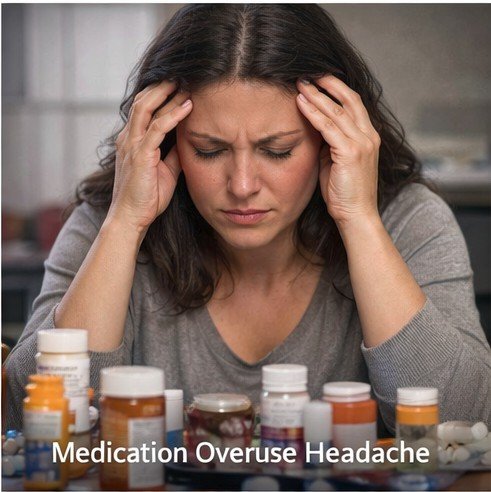
Among the most consequential paradoxes in headache medicine is the fact that the medications most commonly used to relieve headache pain, when taken too frequently, produce a chronic headache condition far more disabling than the original episodic disorder they were intended to treat. This phenomenon, known as medication overuse headache or analgesic rebound headache, affects an estimated one to two percent of the general population and a substantially higher proportion of patients presenting to headache specialty clinics. It is one of the most prevalent causes of chronic daily headache worldwide and represents both a significant public health problem and a challenging clinical management situation.
The condition develops insidiously over months to years in individuals who already suffer from episodic migraine or tension-type headache. The progressive escalation of analgesic use, driven by genuine pain and the rational desire for relief, eventually crosses neurobiological thresholds beyond which the brain’s pain regulatory systems become dysregulated in ways that perpetuate and amplify headache rather than suppress it. Recognizing this condition, understanding its mechanisms, and guiding patients through the process of detoxification and long-term prevention are essential skills for any clinician who manages patients with chronic headache.
Mechanisms of Neurological Dysregulation
Frequent analgesic exposure progressively impairs the descending pain inhibitory pathways that originate in the periaqueductal gray and rostral ventromedial medulla. These systems normally exert tonic inhibitory control over spinal and trigeminal pain processing; their dysfunction allows pain signals to propagate more freely and persistently. Simultaneously, repeated analgesic use sensitizes central trigeminal pain neurons, lowering their firing threshold and expanding their receptive fields, so that stimuli normally below the threshold for headache, minor physiological fluctuations, mild dehydration, or small changes in sleep, become sufficient triggers.
The specific risk varies substantially by drug class. Butalbital-containing combination analgesics and opioids carry the highest risk of inducing neuroadaptation and medication overuse headache, typically developing with use exceeding ten days per month. Triptans and ergotamines carry intermediate risk at a similar frequency threshold. Simple analgesics including NSAIDs and acetaminophen carry the lowest risk, with a higher overuse threshold of approximately fifteen days per month. This hierarchy is critically important when counseling patients about medications including fioricet, patients who buy fioricet at the pharmacy or who order fioricet online with rx must understand that the frequency limit for butalbital-containing medications is among the strictest in headache medicine, generally not exceeding two days per week to prevent neuroadaptation.
Clinical Features
The headache of medication overuse headache is typically present upon awakening, reflecting the rebound in sensitized pain pathways as analgesic levels decline during sleep. It tends to be diffuse, moderate in intensity, and accompanied by a pervasive sense of never being truly free from head pain. Brief intervals of relative relief following medication use are followed by re-emergence of pain as drug levels decline, creating the perpetual cycle of use that defines the condition. Associated symptoms include irritability, anxiety, difficulty concentrating, cognitive slowing, fatigue, and sleep disruption.
The history reveals a characteristic pattern of progressive escalation: a patient who once achieved reliable relief from a modest analgesic dose now finds themselves taking medication almost daily, with diminishing response and gradually worsening baseline headache. Many patients recall that their headaches were once episodic and well-controlled, and are bewildered by the progressive worsening despite increasing medication use. This history, combined with a headache frequency exceeding fifteen days per month in the setting of acute medication use on ten or more days per month, establishes the diagnosis.
The cornerstone of treatment is withdrawal of the overused medication. This is straightforward in principle but challenging in practice, as the withdrawal period, typically seven to fourteen days, involves a marked worsening of headache accompanied by nausea, vomiting, anxiety, restlessness, insomnia, and in the case of butalbital-containing medications, risk of autonomic instability and seizure. These withdrawal symptoms are sufficiently severe that many patients abandon the process before completion, reinforcing the importance of structured medical supervision.
Patients withdrawing from barbiturate-containing analgesics typically require a supervised gradual taper rather than abrupt cessation, to reduce seizure risk and limit withdrawal severity. Bridging medications including short courses of corticosteroids, antiemetics, and NSAIDs can reduce symptom severity during the detoxification period without reinstating an overuse pattern. Inpatient management is indicated for patients with severe dependence, significant comorbidities, or history of failed outpatient attempts.
For patients with a history of medication overuse who are managing breakthrough headaches during or after recovery, the prescribing physician must be explicit about dosing limits for any acute medication recommended. Patients who are advised to purchase fioricet with medical prescription on a strictly limited basis during recovery, for example, for genuinely refractory episodes occurring no more than twice per week, should have this limit documented in writing and confirmed with their dispensing pharmacy. The risk of relapse into an overuse pattern is highest in the first several months following detoxification, and close follow-up during this period is essential.
Prevention and Long-Term Success
Preventing relapse requires addressing both the underlying headache disorder and the behavioral patterns that drove escalation. Preventive headache medications, including topiramate, amitriptyline, valproate, propranolol, and CGRP monoclonal antibodies, reduce the baseline headache frequency that generates the impulse to overuse acute medications. CGRP pathway antagonists have shown particular promise for patients with a history of medication overuse, as preliminary evidence suggests they may maintain efficacy in this setting better than some traditional preventives.
Patient education is transformative. Explaining to patients that their medications are paradoxically perpetuating their suffering, often using the concrete metaphor of a pain thermostat that has been reset to a lower threshold by excessive analgesic exposure, provides the conceptual framework needed to motivate and sustain compliance with frequency limits. Written action plans specifying maximum medication use days per month, early warning signs of approaching the limit, and a step-by-step response plan significantly improve long-term adherence. Cognitive behavioral therapy addressing pain-related anxiety and catastrophizing, mindfulness practices, and regular aerobic exercise all contribute to a sustainable framework for long-term headache management without analgesic overuse.
Headache in Older Adults: An Often Overlooked Clinical Challenge Headache disorders do not end at retirement age. While the peak prevalence of migraine occurs in […]
Starting Your Journey With Fioricet Headache Relief Many adults turn to Fioricet for tension headache relief every year. The medication combines three active ingredients working […]
Headache is the most common and often most debilitating symptom following mild traumatic brain injury, commonly known as concussion. Despite the ‘mild’ classification that medicine […]