Headache is the most common and often most debilitating symptom following mild traumatic brain injury — commonly known as concussion. Despite the ‘mild’ classification that medicine applies to injuries involving brief or no loss of consciousness and limited structural damage on conventional neuroimaging, the headache that follows can be severe, chronic, and remarkably resistant to standard treatments. Post-traumatic headache is defined as new headache or significant worsening of a pre-existing headache developing within seven days of head trauma, and it occurs in an estimated ninety percent of concussion cases, representing a major clinical challenge across neurology, sports medicine, and primary care.
While most post-traumatic headaches resolve within three months — the boundary between acute and persistent post-traumatic headache by international classification criteria — a substantial proportion evolve into persistent post-traumatic headache lasting months to years. This persistent form frequently coexists with a broader post-concussion syndrome that includes cognitive difficulties, sleep disruption, emotional dysregulation, vestibular symptoms, and mood disturbances. Understanding who is at risk, what drives persistence, and how to treat the full spectrum of presentations is essential for optimizing recovery outcomes.
Neurobiological Mechanisms
The neurobiological cascade triggered by concussion produces a state of cellular vulnerability and neuroinflammation that disrupts pain regulatory systems and sensitizes trigeminal pain pathways in ways that can persist long after the initiating injury. Ionic flux across neuronal membranes, glutamate-mediated excitotoxicity, mitochondrial dysfunction, and impaired axonal transport collectively create an energy crisis in the injured brain tissue. Simultaneously, microglial activation and astrocyte responses generate pro-inflammatory cytokines that lower the threshold for pain signaling across wide neural territories.
The calcitonin gene-related peptide system — a central mediator of migraine pathophysiology — is activated following traumatic brain injury, with elevated levels detected in cerebrospinal fluid following concussion. This finding provides mechanistic explanation for why post-traumatic headache so often presents with a migrainous phenotype and supports the rational use of CGRP pathway antagonists as therapeutic agents. Microstructural axonal injury, detectable on advanced diffusion tensor imaging, may explain why some patients experience prolonged recovery despite normal conventional brain MRI.
Clinical Phenotypes and Diagnosis
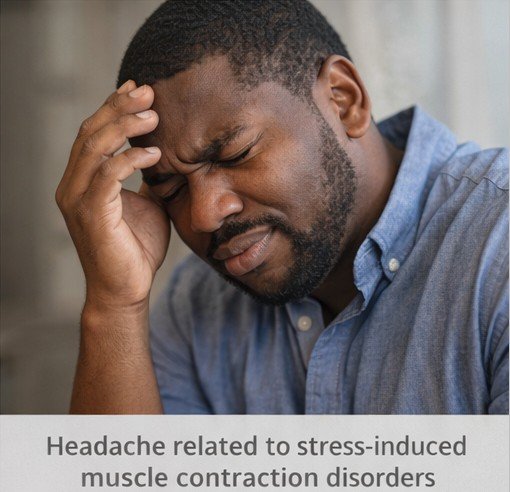
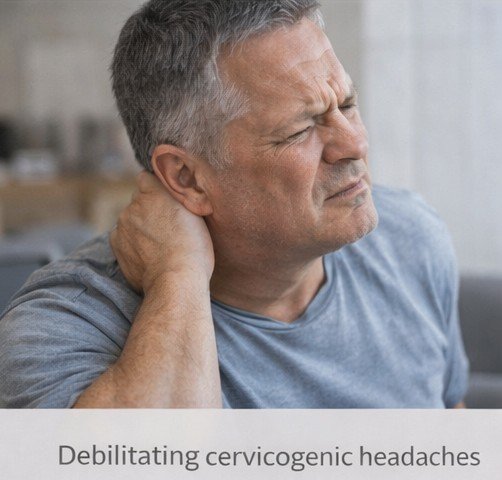
Post-traumatic headache does not present as a single uniform clinical entity but instead adopts the phenotype of established primary headache disorders. The migrainous phenotype — unilateral throbbing pain with nausea and photosensitivity — is most common. The tension-type phenotype — bilateral pressing pain without prominent autonomic features — accounts for another significant proportion. Cervicogenic features reflecting upper cervical injury concurrent with the head trauma are also common, particularly in whiplash-mechanism injuries. Some patients manifest mixed phenotypes with features of multiple headache types simultaneously.
Diagnosis is clinical and based on establishing the temporal relationship between head trauma and headache onset, characterizing the headache phenotype, and excluding secondary causes through appropriate examination and imaging. MRI of the brain with advanced sequences is often obtained but is typically unrevealing in mild traumatic brain injury. Cervical spine MRI is indicated when cervicogenic features are prominent. Neuropsychological testing assesses the cognitive component of post-concussion syndrome and informs return-to-activity decisions.
Risk Factors for Persistence
Identifying which patients will develop persistent post-traumatic headache is an active research priority. Female sex doubles the risk of persistence compared to male sex following equivalent injuries. Pre-existing primary headache disorders — particularly migraine — significantly increase vulnerability by providing a substrate of already sensitized pain pathways. Pre-injury anxiety and depression, high acute post-traumatic stress symptom burden, sleep disruption in the immediate post-injury period, and a history of prior concussion all independently predict chronification.
Importantly, the biomechanical severity of the concussion does not reliably predict headache persistence. Patients with no loss of consciousness and normal imaging frequently develop more severe and prolonged post-traumatic headache than those with more severe indices of injury, reflecting the primacy of neurobiological susceptibility over injury mechanics in determining outcome. Adolescents and young adults appear particularly vulnerable to prolonged recovery and require individualized return-to-activity protocols designed for their developmental stage.
Treatment of post-traumatic headache begins with accurate phenotypic characterization, since management largely follows the phenotype. For the migrainous phenotype, triptans administered early in the episode — before full headache intensity is reached — are a rational and effective acute option. NSAIDs are appropriate for mild-to-moderate tension-type episodes. Non-pharmacological approaches including biofeedback, transcranial magnetic stimulation, and cervical physical therapy for the cervicogenic component have supporting evidence and minimize pharmacological burden.
Preventive treatment is indicated for frequent, disabling, or treatment-resistant post-traumatic headaches. Amitriptyline at low doses addresses headache, sleep disruption, and mood symptoms concurrently. Topiramate and valproate have evidence from migraine prevention that supports their application in post-traumatic headache. CGRP monoclonal antibodies represent a mechanistically rational and promising emerging option.
For severe breakthrough episodes not responding to first-line acute treatment, physicians may recommend combination analgesics as short-term support. When a neurologist advises a patient to buy fioricet after visiting the doctor for this purpose, strict adherence to frequency limits is essential — the chronic daily headache substrate of persistent post-traumatic headache creates significant vulnerability to superimposed medication overuse headache, which would dramatically complicate recovery. The recommended maximum is typically two days per week, and patients should discuss this explicitly with their prescribing provider before they order fioricet at the pharmacy or through any prescription channel. A pre-agreed emergency treatment protocol established before a severe episode occurs — rather than improvising during peak pain — provides the safest framework for acute pharmacological management.
Recovery and Rehabilitation
Graded aerobic exercise — beginning at intensities below the symptom exacerbation threshold and progressively increasing as tolerance develops — has demonstrated effectiveness for both headache reduction and improvement of the broader cognitive and mood symptoms of post-concussion syndrome. This represents a significant evolution from earlier recommendations of strict rest, which have been shown to prolong recovery rather than facilitate it. Vestibular rehabilitation addresses the balance and dizziness symptoms that frequently accompany post-traumatic headache and contribute substantially to functional impairment.
Cognitive behavioral therapy targeting post-traumatic anxiety, depression, and pain catastrophizing produces meaningful improvements in functional outcomes and is an essential component of comprehensive care for patients with persistent symptoms. Sleep optimization — through behavioral sleep hygiene, cognitive techniques for sleep-related anxiety, and pharmacological support when necessary — addresses one of the most powerful modifiable drivers of headache persistence and post-concussion syndrome severity.
Patient education establishing a realistic and optimistic recovery framework — explaining the neurobiological basis of symptoms, countering fears of ongoing brain damage, and clarifying that symptoms are expected to improve with appropriate management — is itself therapeutic and independently improves outcomes. The post-traumatic headache patient who understands their condition, maintains confidence in recovery, and engages consistently with a comprehensive treatment plan achieves meaningfully better outcomes than those receiving purely symptomatic pharmacological management without this educational foundation.
A Three-Component Medication Requires a Three-Component Safety Evaluation Fioricet 40mg combines three pharmacologically active ingredients — butalbital, acetaminophen, and caffeine — in a precisely formulated […]
Stress-induced muscle contraction headache — the form of headache most directly attributable to psychological stress and the associated physiological activation of the sympathetic nervous system […]
pain originating from structural or functional abnormalities of the cervical spine that is referred to the head through convergent neural pathways shared between cervical and […]